
Beyond the New Year’s Weight Resolution
Guiding Our Patients Toward Sustainable Weight Loss in January
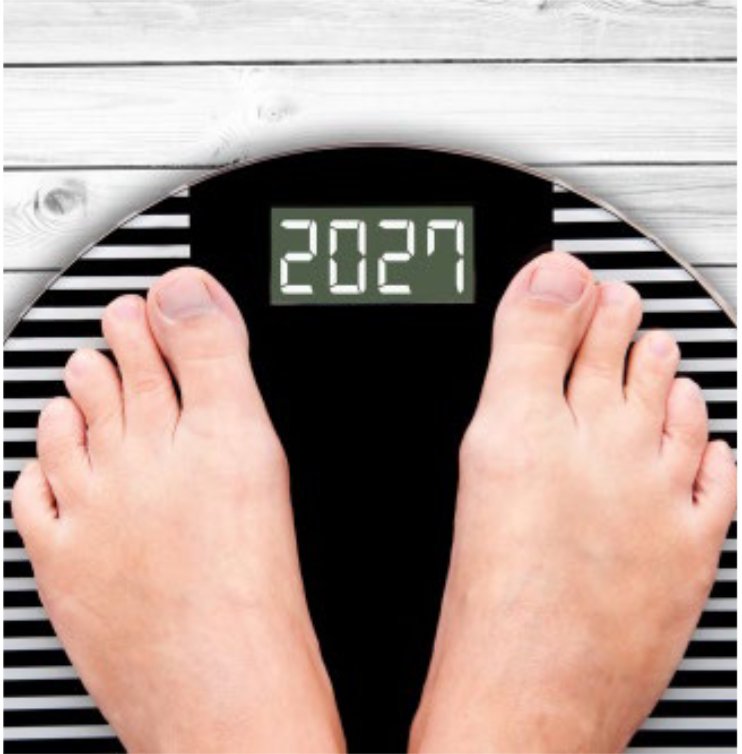
Many of our patients will be starting a weight loss journey right after January 1st, with the post-holiday period, this brings a surge of patients seeking immediate, drastic methods to lose weight.
About 34% of people make a New Year's resolution to lose weight, making it one of the top seasonal goals. However, January weight-loss and diet resolutions face steep drop-off rates, with studies showing New Year resolution success rates hovering around 8% to 20% depending on the groups. National Institutes of Health, 2024
However, data shows that the conventional approach of "eating less and exercising more" frequently falls victim to the quitting within weeks of starting. Patients mistakenly attribute previous failures to a lack of willpower, rather than recognizing unrealistic expectations to sustain a caloric deficit.
I am thankful I have had the opportunity to open and run seven very successful offices over the last 38 years. After I completed my first diplomate in clinical nutrition in 1992, I really dove into what works and what does not work in patients with metabolic weight loss needs.
I want to share with you some clinical framework for building weight loss readiness starting in January based on five pillars: patient education on shopping for food using an approved grocery list, performing a daily intermittent fast, the correct amount of water hydration, ensuring GI waste clearance and gut function, and endocrine stabilization through enough optimized sleep.
Pillar 1: Approved Shopping Grocery List for Burning Stored Fat
Let’s face it our patients just don’t know how to shop at the grocery store for the correct items to support weight loss.
In my weight loss offices, we review our approved grocery list showing approved lean protein, low carb vegetables and low glycemic fruits, approved condiments, spices and beverages. We tell them, “if it’s not on the list, you can’t eat it”.
Asking a patient to rely solely on willpower in a kitchen stocked with highly processed, hyperpalatable foods drives the body in the wrong direction when it comes to burning stored fat. A structured, clinical approved grocery list serves to allow their body to burn food efficiently and not store additional fat. It transitions the patient from an impulsive, reactive eating pattern to an intentional, planned nutritional environment.
Patients should be instructed that if an item is not present on the approved grocery list, it does not enter their home. Then depending on their weight loss goals, we advise them on how many ounces of approved protein, vegetables and fruits at lunch and dinner to eat.
By standardizing the home environment with whole foods—unprocessed proteins, high-fiber complex carbohydrates, and low glycemic fruits — your patients naturally eliminate the external cues that drive overeating and eating the wrong foods.
Pillar 2: Intermittent Fasting
Intermittent fasting accelerates weight loss by shifting the body from burning glucose to burning stored fat for energy while naturally reducing overall calorie intake. We recommend patients skip breakfast and have nothing but water after the evening meal until the next day’s lunch.
By restricting eating to specific windows, you prolong the period when insulin levels remain low, which signals the body to mobilize and consume fat cells. Additionally, this practice simplifies dietary compliance by eliminating the need for constant calorie tracking and enhances metabolic health by improving insulin sensitivity.
Pillar 3: Adequate Cellular Water Hydration
A foundational element of metabolic efficiency is adequate fluid (water) volume. Rather than relying on generic guidelines, hydration must be personalized to the individual's baseline mass.
Patients must aim to consume 50% of their body weight in ounces of water per day (for example, a 200-pound individual requires a baseline target of 100 ounces of water daily).
Data from clinical trials highlights several critical pathways through which precision hydration accelerates weight management success:
- Appetite Suppression: Consuming water, especially prior to meals, expands the stomach volume and stimulates gastric stretch receptors. Clinical data indicates that drinking 16 ounces of water before meals significantly reduces perceived hunger and drops overall caloric intake by an average of 68 to 205 calories per day.
- Metabolic Augmentation: Randomized trials show that drinking 16 ounces of water temporarily increases resting energy expenditure by approximately 30%. This acute thermogenic boost begins within 10 minutes of consumption and peaks between 30 and 40 minutes.
- Lipolysis and Cellular Function: At a cellular level, adequate hydration drives cell volume expansion, which optimizes mitochondrial function and upregulates lipolysis (the breakdown of fats). Also, a point to note, chronic mild dehydration (hypohydration) elevates angiotensin II and vasopressin levels, signaling pathways that actively promote adipose tissue accumulation and insulin resistance
Pillar 4: Gastrointestinal Regularity and Waste Elimination
A patient cannot achieve an optimized metabolic state while suffering from chronic gastrointestinal stagnation (constipation). Ensuring regular bowel movements is an indispensable component of clinical weight loss readiness. We have seen a significant rise in GI or gut dysfunctions due to increased processed and ultra processed foods consumption and increased medication use.
Chronic constipation and irregular bowel motility directly impair the integrity of the gut mucosal barrier and shift the architecture of the gut microbiota. When intestinal transit time is prolonged, the systemic absorption of lipopolysaccharides (LPS) increases, initiating a state of chronic metabolic endotoxemia. This systemic, low-grade inflammation directly disrupts insulin signaling in adipose and muscular tissues, making weight loss biologically harder to achieve.
Pillar 5: Endocrine Stabilization Through Adequate Sleep
Perhaps the most overlooked predictor of dietary failure is sleep deprivation. True physiological readiness requires securing at least 8 hours of sleep per night.
When a patient experiences chronic short sleep duration, the neuroendocrine control of energy balance is severely compromised. Landmark clinical analyses supported by the National Institutes of Health (NIH) demonstrate that chronic sleep restriction induces an immediate elevation in circulating levels of leptin (driving leptin resistance) and a sharp increase in ghrelin, the primary peripheral orexigenic hormone. This neurochemical shift generates intense, physiological cravings for calorie-dense, hyperpalatable carbohydrates, sabotaging even the most dedicated patient's efforts.
Recent randomized crossover trials published in JAMA Internal Medicine evaluated the real-world impact of sleep extension. Overweight adults who habitually slept fewer than 6.5 hours were counseled to extend their sleep to an 8.5-hour window. By increasing their sleep duration by a modest 1.2 hours per night, participants achieved an automated reduction in daily energy intake of approximately 270 kcal, without any intentional dieting or tracking.
Also, data published in the Annals of Internal Medicine indicates that chronic mild sleep loss significantly increases sedentary behavior, adding up to 30 minutes of daily physical inactivity due to fatigue. Ensuring a patient can consistently protect an 8-hour sleep window prevents the hormonal imbalances that drive overeating and sedentary behavior.
Now, I know if your patients just follow these 5 pillars with some consistently from January on, they will see some measurable change by summertime. But I understand most overweight patients will not want to wait that long and/or will not have the will power to keep it going into the summer months.
I know what you’re thinking, “Dr. Morgan, that would work if they followed all pillars completely, but most patients will start to waver off one or more pillars over time and then just give up.” You are correct and that’s what I found as well seeing weight loss patients for years in my clinical nutrition practice.
So, here’s what I found four years ago that completes the weight loss system missing piece that gave patients a simple tool to achieve their weight loss goals safely and in less time. It’s easy to implement, it’s an unattended procedure that could be performed by the office staff, and in a double blinded FDA study showed 100% success showing the only device to promote fat reduction, weight reduction and inch loss. This technology uses a class 3B laser and not infrared light. The manufacturer has a proven track record of over 10 years and over 1,000 units being used throughout the US that gets amazing outcomes. I knew invisa-RED was the best technology to address excess weight but would also be a great business decision I could not pass over.
After four years of using invisa-RED in multiple cities in chiropractic offices, I am still achieving great outcomes. Patients with A1C’s in the 6’s - 9’s and some 10’s going below 5.6 within 2 months with using the invisa-RED laser to reduce body fat and inches. To help your office get results faster through the invisa-RED technology look at their complete business system at www.invisared.com and see how this helped my weight loss and aesthetic clients. I encourage every chiropractic office to guide your weight loss patients with these successful steps to help them achieve their weight management and health goals in 2027.
Dr. Mullican has almost 4 decades of clinical and consulting experience. He is a 1988 honors graduate from Palmer College of Chiropractic. He earned his Diplomate in clinical nutrition in 1993; he completed his C.C.N, Certified Clinical Nutritionist in 1996 and Diplomate from the Chiropractic Board of Clinical Nutrition in 2013. He had one of the largest Chiropractic and nutrition practices in Dallas for over 20 years. In 2022, he opened three Laser Weight Loss locations utilizing the invisa-RED laser, in Oklahoma, Mississippi, and Georgia running them out of one small room at each location. He has been a healthcare consultant for over 20 years helping over 500 Chiropractic offices to achieve best practice. He is a sought-after speaker, having spoken at multiple Chiropractic Colleges and over 35 Chiropractic State Association conferences. He and his wife Dawn have 5 grown children and 8 grandchildren and reside in Gainesville, Georgia. For more information on implementing successful weight management systems contact me at mpmullican@gmail.com
References
- 1. The Landmark NIH Metabolic Ward Inpatient RCT (Weight Management & Caloric Balance) Journal & Publication Date: Cell Metabolism: Ultra-Processed Diets Cause Excess Calorie Intake and Weight Gain: An Inpatient Randomized Controlled Trial of Ad Libitum Food Intake, May 2019
- 2. National Institute of Health: Flipping the Metabolic Switch: Understanding and Applying Health Benefits of Fasting, Clinical reviews highlight that roughly 8 to 12 hours after a patient’s last meal, liver glycogen stores become depleted. This triggers an evolutionarily conserved metabolic switch, April 30, 2018
- 3. Harvard Health Publishing: Consuming water right before a meal stretches the gastric walls, February 20, 2024
- 4. National Institute of Health: Metabolic endotoxemia with obesity, Obesity, metabolic endotoxemia, substrate metabolism, inflammation, endotoxin detection, June 29,2015
- 5. The JAMA Internal Medicine: Effect of Sleep Extension on Objectively Assessed Energy Intake Among Adults with Overweight in Real-life Settings: A Randomized Clinical Trial, February 7, 2022
- 6. The Annals of Internal Medicine: Insufficient Sleep Undermines Dietary Efforts to Reduce Adiposity, Dr. Arlet V. Nedeltcheva, MD, Clinical researchers at the University of Chicago, October 5, 2010
- 7. The National Institutes of Health (NIH): Drawn from multi-year behavioral tracking datasets archived by the National Center for Biotechnology Information (NCBI/NIH) outlining seasonal weight-management intervention drop-off baselines. Grounded in fundamental neuroendocrine research sponsored by the National Heart, Lung, and Blood Institute (NHLBI), which maps how chronic sleep restriction impairs circulating leptin levels and spikes peripheral ghrelin.