
Are Allergies Aging Us?
The Smoldering Embers of Chronic Inflammaging
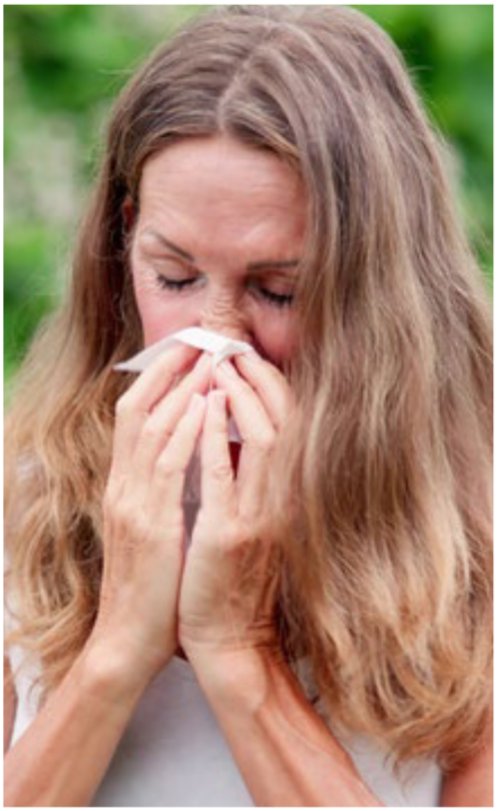
Inflammaging is the process and feedback loop by which inflammation causes accelerated aging, and aging increases inflammation. Inflammaging and allergies are deeply intertwined through a destructive biochemical pathway.
The chronic insult of allergies to the immune system is like the smoldering embers of a raging fire that erupts when inflammaging is acute. Allergies actively feed the body’s baseline level of systemic inflammation, and when combined with the aging process that leads to weakened immune systems, it all contributes to cellular damage, degradation of collagen, increased cytokines, senescent (zombie) cells, increased reactivity, and basically biological decay. (Please see “Cellular Senescence: Why We Need to Pay Attention” at theamericanchiropractor.com/article/2025/5/1/cellular-senescence-why-we-need-to-pay-attention).
Over time, this slow-burning fire compromises physiological resilience, directly driving the onset of frailty, tissue degradation, and age-related chronic problems. Allergic inflammation forces immune cells to generate massive amounts of free radicals that attack healthy cells, and chronic activation directly degrades epithelial barriers, leading to leaky gut.
This allows environmental toxins, undigested proteins, and microorganisms to penetrate deep into structural tissues. The continuous influx of these foreign particles forces the immune system to remain permanently activated, draining cellular energy and accelerating overall decline.
This persistent internal “fire” alters standard immune activity, turning normal defense mechanisms into drivers of tissue breakdown and accelerated biological aging. Chronic allergies combined with the immunosenescence that occurs with age lead to a shrinking pool of T cells and impaired phagocytosis.
The exhausted immune system loses the ability to clear away these dead cells, cellular debris, and circulating inflammatory factors. This clearance failure causes cellular waste to accumulate, further intensifying the inflammatory cycle.
Immunosenescence also causes a functional shift toward T-helper type 2 (Th2) immune cells, which are more prone to produce inflammatory cytokines. Because Th2 pathways are the primary drivers of allergic responses, biological aging inherently predisposes the body to experiencing sustained allergic hypersensitivity.
Another thing that happens is that mast cells become immunosenescent, and mast cells are the primary immune cells responsible for releasing histamine during an allergic reaction. Instead of activating only when an allergen is present, senescent mast cells become hyperreactive, continuously leaking proinflammatory cytokines and sustaining the fires of inflammaging.
Problems of Addressing Allergies with Drugs
What happens when drugs are the choice to reduce allergy symptoms?
First, diphenhydramine (brand name Benadryl) is a commonly used drug and a first-generation antihistamine OTC drug often taken as a sleep aid because of its sedative qualities. However, if people realized that this drug messes with their brain, it is doubtful it would be so commonly used.
Diphenhydramine is an antihistamine that dries up mucous membranes but impairs memory and cognition because of its ability to cross the blood-brain barrier and block acetylcholine, a memory neurotransmitter. Because of that, many have researched the associated increased risk of long-term cognitive decline and dementia. Although second-generation antihistamine drugs are less damaging to the brain (i.e., cetirizine, loratadine, or fexofenadine), they can be counterproductive for long-term health because they treat the superficial symptom of histamine while allowing the root cause of biological aging (inflammaging) to burn unchecked.
A lot can be done naturally to cut this cycle and nip inflammaging in the bud. A healthy diet and lifestyle boosted by nutritional supplements can support a normal immune system and reactivity to allergens.
Quercetin is a potent plant flavanol that operates at both the immediate allergic level and the deeper cellular-aging level to support healthy reactivity responses. It contributes to mast cell membrane stability, inhibits the NF-KB inflammatory pathway (a primary genetic switch for core inflammation), and clears damaged zombie cells and their associated cytokine secretions that exacerbate allergic reactions.
Bromelain is a proteolytic enzyme derived from pineapple. When used for seasonal support, it helps maintain healthy sinus drainage and supports the body’s natural tissue-repair processes and tissue comfort following overexertion or irritation. Bromelain is well known for having a profound supportive effect on prostaglandins and cytokines and maintaining normal T cell responses and B cell antibody responses. Bromelain keeps things in balance, whereas imbalance can cause cascade reactions that trigger neutrophils and macrophages.
Perilla seed promotes clear airway function and supports a balanced immune system during environmental changes. It has been tested in situations of reactivity and is well known for its ability to support and maintain a calm, nonreactive cellular environment.
Nettle leaves (Urtica dioica) contain phytochemically powerful compounds and also affect multiple pathways, including the regulation of prostaglandin production and other signaling molecules. Nettle extract affects key receptors and enzymes associated with reactivity. This supports the body’s natural ability to manage reactivity in the nasal passages. It supports upper respiratory comfort and helps maintain a normal inflammatory response to outdoor irritants.
Together, these nutrients address the major areas involved in reactivity: mast cells, nasal and respiratory linings, and cytokines. Synergistically, they are able to establish their positive effect on keeping reactivity in balance.
This is the first article in a three-part series on inflammaging that relates to different health scenarios. This first scenario of allergy and inflammaging will be further explored at the Annual Symposium in Scottsdale, Arizona, presented by Nutri-West, January 29–31, 2027 (https://nutriwest.com/seminars/2027-nutri-west-annual-symposium-inflammaging-why-youre-aging-faster-than-you-should-be-and-what-nutrition-can-do) with a general symposium theme of “The Raging Fire of Inflammaging and Nutritional Support.”
Two of the seven presenters from the conference are Jared Allomong, a DC and functional methylation expert, and Richard Belli, a DC and former president of the ICAK. Dr. Allomong has exciting new research and will provide a unique perspective on inflammaging and methylation pathways while elaborating on how allergies play into inflammaging. Dr. Belli brings a well-documented and experienced approach to inflammaging that incorporates muscle/tendon reflexes and real-life applications for dealing with allergies.
Tune in next month for a different inflammaging scenario and focus on two more inflammaging experts.
Dr. Lynn Toohey organizes seminars, acts as a nutritional consultant to Nutri-West (www.nutri-west.com) and authored the Functional Health Evaluation program that analyzes blood tests and DNA raw data (FHEcloud.com). Dr. Toohey can be reached at 866-271-8888 or by email at drtooheynutriwest@gmail.com with any questions.
References
- 1. Aitella E, Azzellino G, Cammisuli BA, De Benedictis C, Di Mattia D, Romano C, Ginaldi L, De Martinis M. Immunosenescence and allergy: molecular and cellular links between inflammaging, neuro-immune aging, and response to biologic therapies. Int J Mol Sci. 2026 Jan 25;27(3):1206. doi: 10.3390/ijms27031206. PMID: 41683635; PMCID: PMC12898103.
- 2. Azzolino D, Verdi L, Perna S, Baldassari I, Cesari M, Lucchi T. Food allergies in older people: an emerging health problem. World Allergy Organ J. 2024 Sep 11;17(9):100967. doi: 10.1016/j.waojou.2024.100967. PMID: 39310373; PMCID: PMC11416488.
- 3. Voltan C, Concer F, Pecoraro L, Pietrobelli A, Piacentini G, Zaffanello M. Exploring the complex interplay of obesity, allergic diseases, and sleep-disordered breathing in children. Children (Basel). 2024 May 15;11(5):595. doi: 10.3390/children11050595. PMID: 38790590; PMCID: PMC11120164.
- 4. Karpuzoglu E, Holladay SD, Gogal RM Jr. Inflammaging: triggers, molecular mechanisms, immunological consequences, sex differences, and cutaneous manifestations. Front Immunol. 2025 Dec 5;16:1704203. doi: 10.3389/fimmu.2025.1704203. PMID: 41425557; PMCID: PMC12714610.
- 5. Sturmlechner I, LeBrasseur NK, Weyand CM, Goronzy JJ. The immunology behind inflammaging-causes, sources, and mechanisms. J Allergy Clin Immunol. 2026 Sep;158(3):629-641. doi: 10.1016/j.jaci.2026.05.031. Epub 2026 Jun 20. PMID: 42322994; PMCID: PMC13420867.
- 6. Soma T, Nagata M. Immunosenescence, inflammaging, and lung senescence in asthma in the elderly. Biomolecules. 2022 Oct 11;12(10):1456. doi: 10.3390/biom12101456. PMID: 36291665; PMCID: PMC9599177.
- 7. Ibarra-Sánchez A, Madera-Salcedo I, Esparza-Reyes D, Mendoza-Montiel P, Padilla J, González-Espinosa C. A prominent pro-inflammatory phenotype is observed in replication and stress-induced senescent mast cells. Aging Cell. 2025 Oct;24(10):e70186. doi: 10.1111/acel.70186. Epub 2025 Aug 28. PMID: 40875511; PMCID: PMC12507405.
- 8. Kundu D, Kennedy L, Meadows V, Baiocchi L, Alpini G, Francis H. The dynamic interplay between mast cells, aging/cellular senescence, and liver disease. Gene Expr. 2020 Nov 11;20(2):77-88. doi: 10.3727/105221620X15960509906371. Epub 2020 Jul 29. PMID: 32727636; PMCID: PMC7650013.
- 9. Harvard Health Publishing Staff. Common anticholinergic drugs like Benadryl linked to increased dementia risk [Internet]. Boston: Harvard Health Publishing Staff/Harvard Medical School. 2025 January 9. Available from: https://www.health.harvard.edu/blog/common-anticholinergic-drugs-like-benadryl-linked-increased-dementia-risk-20150128812
- 10. Zhao C, Ding Y, Huang Y, Wang C, Guo B, Zhang T. Quercetin attenuates MRGPRX2-mediated mast cell degranulation via the MyD88/IKK/NF-κB and PI3K/AKT/ Rac1/Cdc42 pathway. J Inflamm Res. 2024 Oct 7;17:7099-7110. doi: 10.2147/JIR.S480644. PMID: 39398230; PMCID: PMC11468308.
- 11. Das D, Banerjee A, Mukherjee S, Maji BK. Quercetin inhibits NF-kB and JAK/STAT signaling via modulating TLR in thymocytes and splenocytes during MSG-induced immunotoxicity: an in vitro approach. Mol Biol Rep. 2024 Feb 6;51(1):277. doi: 10.1007/s11033-024-09245-7. PMID: 38319443.
- 12. Medoro A, Davinelli S, Scuderi L, Scuderi G, Scapagnini G, Fragiotta S. Targeting senescence, oxidative stress, and inflammation: quercetin-based strategies for ocular diseases in older adults. Clin Interv Aging. 2025 Jun 7;20:791-813. doi: 10.2147/CIA.S516946. PMID: 40503074; PMCID: PMC12155388.
- 13. Alves Nobre T, de Sousa AA, Pereira IC, Carvalho Pedrosa-Santos ÁM, Lopes LO, Debia N, El-Nashar HAS, El-Shazly M, Islam MT, Castro E Sousa JM, Torres-Leal FL. Bromelain as a natural anti-inflammatory drug: a systematic review. Nat Prod Res. 2025 Mar;39(5):1258-1271. doi: 10.1080/14786419.2024.2342553. Epub 2024 Apr 27. PMID: 38676413.
- 14. Takano H, Osakabe N, Sanbongi C, Yanagisawa R, Inoue K, Yasuda A, Natsume M, Baba S, Ichiishi E, Yoshikawa T. Extract of Perilla frutescens enriched for rosmarinic acid, a polyphenolic phytochemical, inhibits seasonal allergic rhinoconjunctivitis in humans. Exp Biol Med (Maywood). 2004 Mar;229(3):247-54. doi: 10.1177/153537020422900305. PMID: 14988517.
- 15. Dissook S, Umsumarng S, Mapoung S, Semmarath W, Arjsri P, Srisawad K, Dejkriengkraikul P. Luteolin-rich fraction from Perilla frutescens seed meal inhibits spike glycoprotein S1 of SARS-CoV-2-induced NLRP3 inflammasome lung cell inflammation via regulation of JAK1/STAT3 pathway: a potential anti-inflammatory compound against inflammation-induced long-COVID. Front Med (Lausanne). 2023 Jan 9;9:1072056. doi: 10.3389/fmed.2022.1072056. PMID: 36698809; PMCID: PMC9870545.
- 16. Vollmar A, Moser S. The advent of phyllobilins as bioactive phytochemicals – natural compounds derived from chlorophyll in medicinal plants and food with immunomodulatory activities. Pteridines. 2023 February;34(1):20220047. doi:10.1515/pteridines-2022-0047.