
The Patient Pathway
Building Better Spine Care Through Communication, Systems, and Collaboration
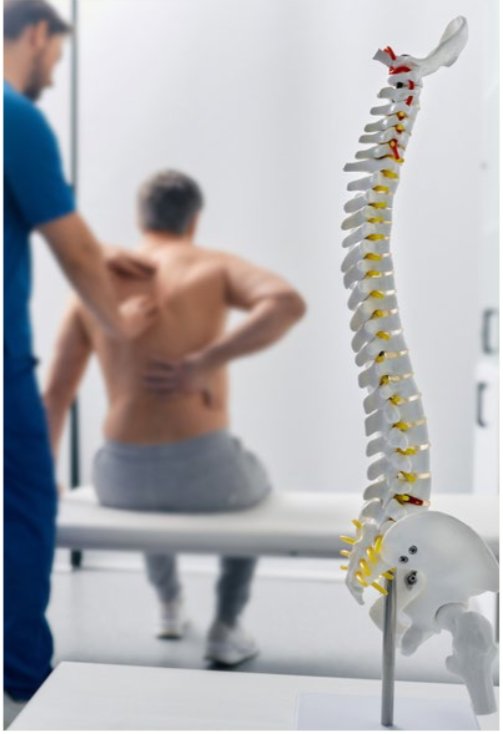
For most patients with mechanical spine pain, health care does not occur in a straight line. A patient may enter through primary care, chiropractic, urgent care, physical therapy, or an emergency department and eventually interact with radiologists, therapists, pain management physicians, neurologists, or spine surgeons. Each professional may contribute to recovery, but without someone managing the overall clinical pathway, even excellent individual care can become fragmented. This is an area where chiropractors have an important opportunity to lead.
The chiropractor appropriately trained in the diagnosis and management of mechanical spine pain can become the central clinical point from which care is organized. This does not mean providing every service. It means understanding the patient’s condition, determining appropriate care, measuring response, recognizing changes in the clinical picture, and knowing when another professional should become involved. Effective coordination requires systems that ensure decisions made in the examination room carry through the patient’s entire experience.
In my own practice, I have become increasingly interested in the systems that make this possible. My husband, Dr. Jeremy Darnell, and I practice together at Freedom Chiropractic Spine & Injury Center in Spring Hill, Tennessee. Working together has reinforced something that applies to health care broadly: good clinical care depends on good systems. A doctor may make an excellent diagnosis and treatment plan, but the patient’s outcome can still suffer when communication, follow-up, or workflow breaks down.
That process begins with the first patient interaction. When someone enters our practice with mechanical spine pain, we need to understand what is wrong, whether the condition is appropriate for conservative management, what we are attempting to accomplish, how progress will be measured, and what happens if the patient does not respond as expected. These questions create the foundation of a clinical pathway.
The examination establishes the working diagnosis and identifies findings that may require imaging, additional testing, or referral, while the treatment plan establishes an appropriate conservative strategy. Equally important, patients should understand what we found, what we are doing about it, and what improvement should look like.
This is where patient communication becomes much more than a practice-management function. Communication is part of clinical care.
A patient who understands the diagnosis and care pathway becomes an informed participant rather than simply a recipient of treatment. Consistent communication during treatment, reassessments, and changes in the plan helps patients understand what is happening, why recommendations are being made, and what should happen next.
The same principle becomes even more important when interprofessional care is necessary. If a patient requires physical therapy, advanced imaging, medical consultation, pain management, or surgical evaluation, referral should not represent the point where the chiropractor’s responsibility ends.
Instead, it is a transition within the care pathway. The receiving provider should understand what we found, what has been attempted, how the patient responded, and why their expertise is being requested. When the consultation is completed, that information should return to the patient’s management pathway and inform the next clinical decision.
This is how I envision the chiropractor functioning at the center of mechanical spine care — not as the provider who does everything, but as the clinician who keeps the components connected. Interprofessional care should expand the resources available to the patient without fragmenting responsibility for the overall direction of care.
One of the most important distinctions in coordinated spine care is the difference between providing a service and taking ownership of a clinical pathway. Ownership does not mean that one provider controls every aspect of care. It means that someone remains responsible for asking the next question.
Did the patient improve as expected? Was the referral completed? Did the imaging change our understanding of the condition? Did the consulting provider make recommendations that should alter the treatment plan? Has the patient’s presentation changed enough that the original diagnosis or strategy needs to be reconsidered?
Without that ownership, patients can easily become the default coordinators of their own care. They carry reports from one office to another, repeat their history, interpret recommendations they may not fully understand, and are left wondering who is actually responsible for determining what happens next.
A well-designed clinical pathway removes that burden from the patient. The goal is not to keep every aspect of care within one profession or one office. The goal is to make sure someone is continually looking at the whole picture and asking, “Based on what we know today, what is the most appropriate next step for this patient?”
Research increasingly supports healthcare models in which spine care is measured and coordinated rather than delivered as isolated encounters. A 2023 analysis of chiropractic care within the Veterans Health Administration examined a systemwide approach to assessing low back pain care quality using electronic health record data, demonstrating how chiropractic services can function within a larger system where processes and outcomes are measurable.¹
Multidisciplinary research has also demonstrated potential advantages when conservative disciplines are intentionally integrated around patients with low back pain.² More recent research examining integrative medicine clinics demonstrates that patients commonly move among multiple nonpharmacologic services, reinforcing the need for thoughtful coordination.³
The challenge is translating these concepts into everyday practice. Technology can help through automated patient communication, outcome measures, referral tracking, imaging workflows, reassessment reminders, and electronic documentation.
However, technology cannot correct a poorly designed clinical process. We first need to determine what should happen, when it should happen, who is responsible, and what information needs to be communicated. Once that pathway is defined, technology helps the system operate consistently.
Automation should support clinical judgment, not be a substitute for it. An automated bad workflow is simply a bad workflow that happens faster.
For example, an electronic health record can remind the office that a reassessment is due, but the reminder itself has little clinical value unless the pathway defines the question that reassessment is intended to answer: Is the patient responding at the expected rate? If not, does the diagnosis need to be reconsidered, should the treatment strategy change, or is additional imaging, testing, or referral appropriate? Technology is most useful when it reinforces a thoughtful clinical process rather than attempting to create one.
That consistency ultimately benefits the patient. Patients should not have to manage their own healthcare system, determine whether referrals were completed, track imaging reports, or explain one doctor’s recommendations to another. Our systems should accomplish that for them. When the pathway is organized around the patient, communication becomes more predictable, transitions between providers become smoother, and everyone involved better understands the overall course of care.
This represents an important opportunity for chiropractic. Our value should not be measured solely by the treatment performed during an office visit. Chiropractors can become highly skilled diagnosticians and managers of mechanical spine pain who evaluate the patient, initiate appropriate conservative care, measure outcomes, communicate clearly, and coordinate additional services when clinically necessary.
Interprofessional care does not move the chiropractor away from the center of spine care. Done correctly, it positions the chiropractor as the clinician who understands the mechanical problem, monitors the response to care, and helps determine where the patient needs to go next.
Being at the center of the pathway is not a title chiropractors can simply give themselves. The role is earned by demonstrating that chiropractors can diagnose appropriately, measure outcomes, recognize when the clinical picture changes, communicate effectively with other disciplines, refer appropriately, and remain accountable for what happens next. If chiropractic is going to occupy a central position in mechanical spine care, those capabilities must become part of the standard expected from chiropractors.
That role requires clinical knowledge, communication, accountability, and well-designed systems. Ultimately, those systems should accomplish one simple goal: make it easier for the patient to receive the right care from the right professional at the right point in their recovery.
Elizabeth “Libby” Darnell, DC, is a chiropractor and owner of Freedom Chiropractic Spine & Injury Center in Spring Hill, Tennessee, where she practices alongside her husband, Jeremy Darnell, DC, CCSP. Together, Drs. Darnell provide conservative spine and musculoskeletal care utilizing individualized treatment planning, chiropractic care, rehabilitation strategies, and advanced technologies, including nonsurgical spinal decompression and class IV laser therapy. Dr. Darnell has a particular interest in patient communication, practice systems, clinical workflows, and the development of reproducible care pathways that improve the patient’s experience while supporting high-quality clinical decision-making. She is currently a Fellowship Candidate with the National Spine Management Group, expanding her training in spinal biomechanics, trauma, imaging, and interdisciplinary spine management.
References
- 1. Lisi AJ, Bastian LA, Brandt CA, Coleman BC, Fenton B, King JT Jr, Goulet JL. The impact of chiropractic care on opioid prescriptions in Veterans Health Administration patients receiving low back pain care. J Gen Intern Med. 2025 Dec;40(16):3973-3981. doi: 10.1007/s11606-025-09556-w. Epub 2025 May 20. PMID: 40394439; PMCID: PMC12686267.
- 2. Bronfort G, Maiers M, Schulz C, Leininger B, Westrom K, Angstman G, Evans R. Multidisciplinary integrative care versus chiropractic care for low back pain: a randomized clinical trial. Chiropr Man Therap. 2022 Mar 1;30(1):10. doi: 10.1186/s12998-022-00419-3. PMID: 35232482; PMCID: PMC8886833.
- 3. Roseen EJ, Hurstak EE, Kim RS, Gao Q, Greco CM, Vago DR, Saper RB, Kligler B, McKee MD, Dusek JA; PRIM-IER Study. Nonpharmacologic back pain treatment use and associated patient-reported outcomes in US-based integrative medicine clinics. Glob Adv Integr Med Health. 2025 Jun 2;14:27536130251345481. doi: 10.1177/27536130251345481. PMID: 40463627; PMCID: PMC12130646.